I was wiping down my counters recently when I went to grab a cleaner and realized I had no idea where I’d put it — again. Some bottles were under the sink, a few were shoved in a drawer, and the rest seemed to wander wherever they wanted. That’s when it hit me: storing cleaning supplies in the right places isn’t just about organization, it actually makes the whole kitchen run smoother.
If you’ve ever found yourself hunting for a sponge or spray in the middle of a mess, let me share the smart storage spots that have made my kitchen cleanup so much easier.
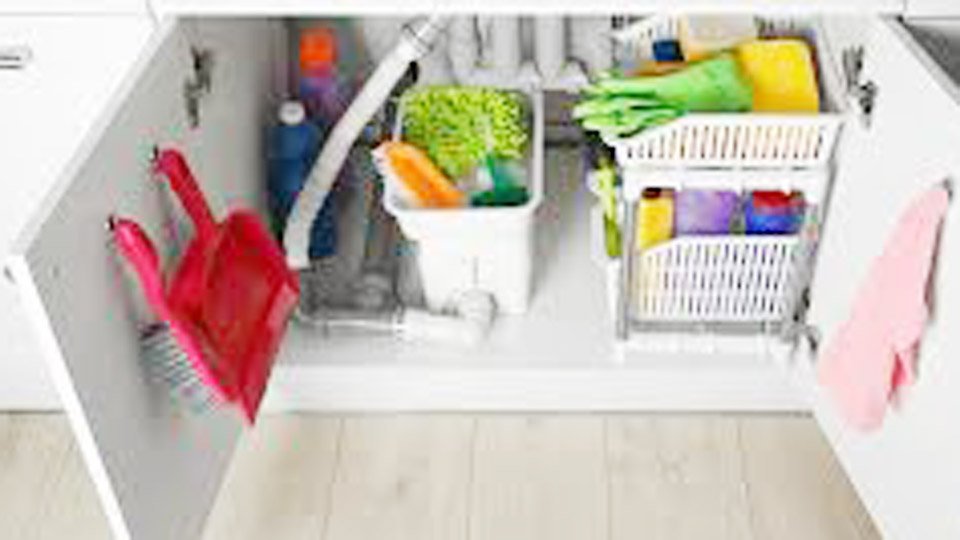
Image by inthewash.co.uk
Why Most People Store Cleaning Supplies Wrong (And Pay for It Later)
Under the kitchen sink feels logical — it’s close to water, right? Wrong for most of us. Pipes leak, bottles tip, kids and pets get into things, and suddenly your dish soap is swimming with your drain cleaner. I learned that the hard way when a slow leak ruined an entire box of trash bags and two bottles of Mrs. Meyer’s I’d been babying.
The goal is simple: keep supplies handy, safe, and dry. Everything else is negotiable.
The Best Places to Store Cleaning Supplies in a Kitchen
1. A Dedicated “Cleaning Caddy” You Can Grab and Go
This changed everything for me. I keep a cheap plastic caddy (the $8 one from Target with a handle) stocked with my daily fighters: all-purpose spray, microfiber cloths, dish soap, baking soda shaker, and a small scrub brush. It lives on the bottom shelf of the pantry or inside the cabinet next to the fridge. Spill on the floor? Grab the whole caddy, deal with it, put it back. No digging.
Pro tip: Line the bottom with a washable placemat. When something inevitably leaks, you just toss the mat in the laundry.
2. High Cabinet Above the Fridge or Stove (For Rarely-Used or Toxic Stuff)
Oven cleaner, heavy-duty degreaser, and anything with a skull-and-crossbones label goes way up high. Kids can’t reach, pets don’t care, and you only pull it out twice a year anyway. I use a lazy Susan up there so nothing gets lost in the back.
3. Inside a Deep Drawer with Dividers
If you’re lucky enough to have a wide, deep drawer (the kind meant for pots), convert it. I bought two $12 bamboo drawer organizers from Amazon and now have separate zones for dishwashing pods, sponges, scrub brushes, trash bags, and rags. Everything stands upright, nothing tips, and I can see it all at a glance.
4. Over-the-Door Organizer on the Pantry Door
Zero floor space? No problem. A clear over-the-door pocket organizer holds spray bottles perfectly (the pockets are deep enough that nothing falls out when you swing the door). I label the pockets with a Sharpie: “Glass,” “Counters,” “Stainless,” “Wood.” Takes thirty seconds to install and costs about fifteen bucks.
5. A Rolling Cart Tucked Next to the Fridge
My sister swears by this in her 1970s kitchen with almost no cabinets. A narrow three-tier rolling cart from IKEA slides into the 6-inch gap beside her refrigerator. Top shelf: daily sprays. Middle: paper towels and extra rags. Bottom: heavy stuff like bleach and floor cleaner. When company comes, she rolls it into the laundry room and it disappears.
What Actually Belongs in Your Kitchen Cleaning Stash (And What Doesn’t)
Keep in the kitchen:
- Dish soap and dishwasher pods
- All-purpose cleaner (I make my own with water, vinegar, and a few drops of Dawn)
- Glass cleaner or vinegar in a spray bottle
- Microfiber cloths (I keep 20 in a drawer — they’re life)
- Baking soda and a shaker for quick deodorizing
- Scrub brushes and sponges
- Trash bags and recycling bags
- Paper towels (one roll out, extras hidden)
Move somewhere else:
- Laundry detergent (belongs in the laundry room)
- Toilet bowl cleaner (gross to store near food)
- Furniture polish (bedroom closet or living room)
- Window cleaner if you only use it monthly
Child and Pet Safety: Non-Negotiable Rules I Follow
Even if you don’t have toddlers anymore, your niece might visit. I use two simple rules:
- Anything that says “poison” or “fatal if swallowed” lives in a locked box or above 5½ feet. I bought a $20 lockable clear bin from Home Depot that fits perfectly on the top shelf.
- Everyday sprays go in the caddy, but the caddy itself sits on a shelf my dog can’t nose open and my grandkids can’t reach without a step stool.
A friend of mine keeps magnetic cabinet locks from when her kids were little — still installed ten years later because they’re just that convenient.
How I Organized My Tiny Apartment Kitchen (Proof It Works Anywhere)
When I lived in a 600-square-foot place in Chicago, I had exactly one lower cabinet and one upper. Here’s what I did:
- Under sink: A $15 two-tier sliding organizer. Bottom tier held the trash can. Top tier held dishwasher pods in a sealed jar and extra sponges. All chemicals lived upstairs.
- Above the stove: One lazy Susan with oven cleaner, stainless steel spray, and wood oil.
- Inside the cabinet next to the fridge: My caddy and a stack of clean rags in an old shoe box.
Total cost: about $45. Time: one Saturday morning. Stress reduction: 1000%.
Genius Lazy Hacks That Save Me Time Every Single Week
- Keep a separate mini spray bottle of 50/50 vinegar-water under the sink just for the microwave. No digging for the big bottle.
- Store microfiber cloths in an empty tissue box — pull one out like Kleenex.
- Hang a small mesh laundry bag on a Command hook inside the cabinet door for dirty rags. When it’s full, throw the whole bag in the wash.
- Cut an old pool noodle to size and wedge it in front of bottles on deep shelves so nothing tips forward when you grab something from the back.
- Use dollar-store tension rods vertically in deep cabinets to create “walls” that keep bottles from falling over.
Best Kitchen Cleaning Storage Solutions I’ve Actually Used
| Solution | Best For | Cost | Space Needed | My Rating |
|---|---|---|---|---|
| Plastic cleaning caddy | Daily use, quick grabs | $8–15 | One shelf | 10/10 |
| Over-the-door pockets | Tiny kitchens, renters | $15 | Zero floor space | 9/10 |
| Deep drawer dividers | Big families, lots of tools | $20–40 | One deep drawer | 10/10 |
| Rolling utility cart | Kitchens with awkward gaps | $30–80 | 6–12 inches wide | 8/10 |
| Under-sink pull-outs | People who refuse to give it up | $25–60 | Existing cabinet | 7/10 |
The One Storage Mistake I Still See in Almost Every House
People cram thirty bottles into one cabinet “because it all fits.” It doesn’t fit if you have to unload half of it to reach the one thing you need. If you haven’t used something in six months, it doesn’t belong in prime kitchen real estate. I do a quick purge every January and July — anything expired or duplicated gets tossed or moved to the garage.
Final Thought
After fifteen years of trial and error (and a few marinara explosions), I can find my all-purpose spray blindfolded in under four seconds. My counters stay clearer, my stress stays lower, and I’m no longer terrified of surprise guests walking into a cleaning-supply avalanche.
Start small: grab a cheap caddy this weekend, pick your ten must-have items, and claim one shelf or drawer that’s just for cleaning. Do that one thing and you’ll immediately feel like you got a brand-new kitchen.
Label nothing the first week. Use everything exactly where it lands. Whatever you reach for most often earns the prime spot. Your own habits will tell you the best system — not some blogger on the internet (yes, even me).
FAQ: Real Questions I Get Asked All the Time
Where is the safest place to store cleaning supplies in a kitchen with toddlers?
Anything poisonous goes in a locked box or above 5½ feet. Everyday cleaners can stay in a high caddy or behind child locks. I also switched to plant-based sprays for anything at kid level — peace of mind is worth the extra two bucks.
Can I store cleaning supplies near food?
Not ideal. Even sealed bottles can leak fumes. Keep food on one side of the pantry, cleaning on the other — or better yet, give cleaning its own zone entirely.
What’s the best way to store sponges so they don’t smell?
Squeeze them out completely, then keep them in a mesh bag or a soap dish with ridges so air flows. Replace or microwave them (wet, 1 minute) every week. I keep a “dirty” sponge and a “clean” sponge and swap when company’s coming.
How often should I reorganize my cleaning supplies?
Twice a year max. Once when you switch to spring cleaning mode, once before the holidays. Anything more than that and you’re just procrastinating actual cleaning.
Is it okay to store cleaning supplies in the garage instead?
Totally fine for backups or bulky items (extra paper towels, mop refills), but keep your daily drivers inside. Nobody wants to walk outside in socks because the dog just tracked mud across the floor.
Your kitchen deserves a system that makes spills less disastrous. Pick one idea from today, try it for a week, and watch how much calmer your days feel.